Diplomacy in Practice: Highlights from the 2026 IPSA-Concordia Summer Institute in Applied Diplomacy
Publication date: Thu, 27 Aug 2026
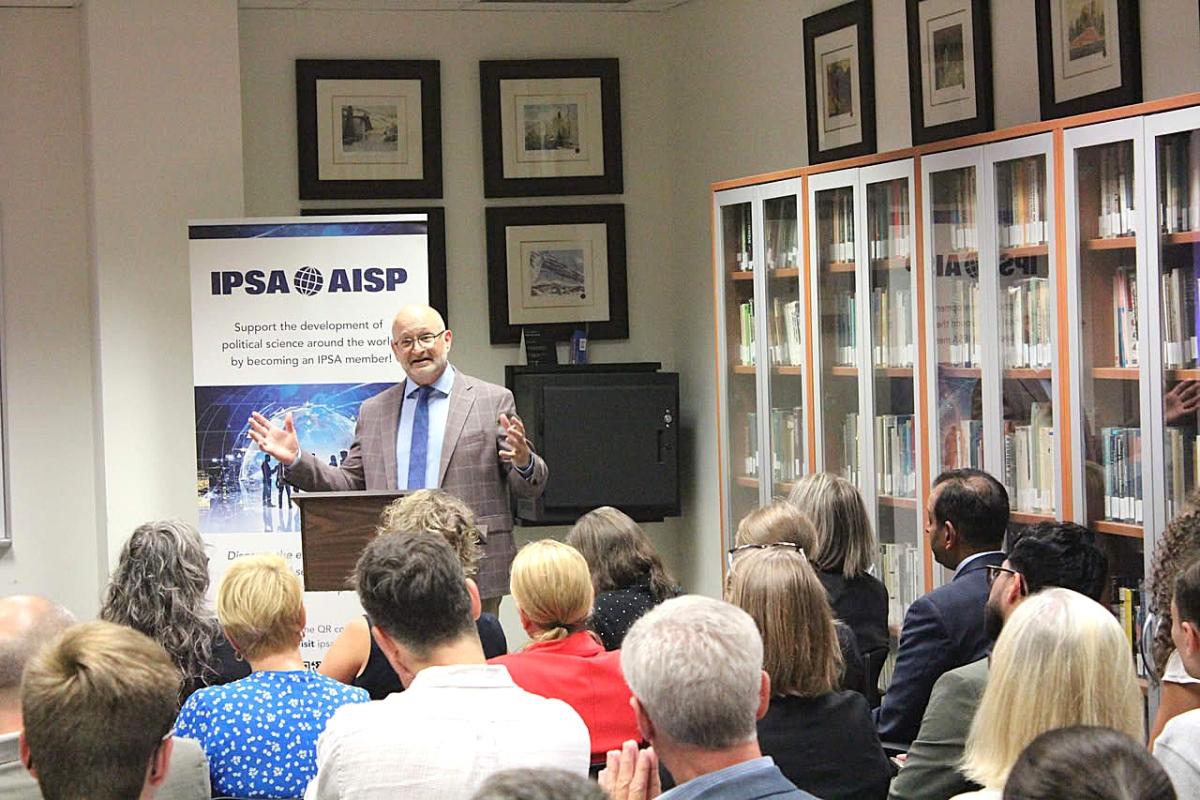
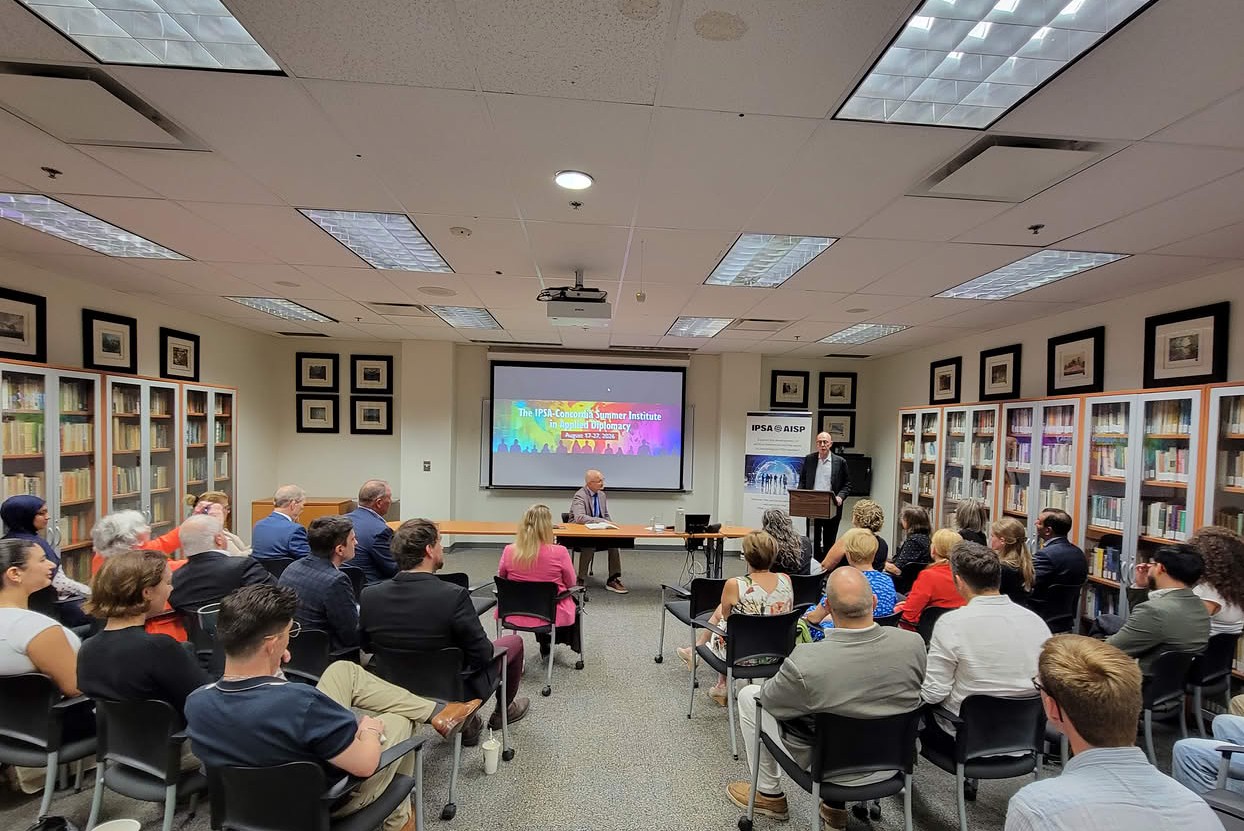
Photo: H.E. David Lametti, Ambassador and Permanent Representative of Canada to the United Nations in New York, delivers a keynote address at the 2026 IPSA-Concordia Summer Institute.
The 2026 edition of the IPSA-Concordia Summer Institute in Applied Diplomacy was held in Montréal and virtually from 17 to 27 August 2026. The Summer Institute was offered in person, with the option for students taking non-credit courses to participate virtually via Zoom. A total of 30 participants attended this year’s program.
Keynote Address by Ambassador David Lametti
 The 2026 IPSA-Concordia Summer Institute in Applied Diplomacy kicked off at Concordia University on 17 August 2026, with a keynote address by H.E. David Lametti, Ambassador and Permanent Representative of Canada to the United Nations in New York, who delivered a lecture titled Middle Power Multilateralism. In his lecture, Ambassador Lametti shared insights on the United Nations and Canada’s opportunities within the multilateral system. He examined the challenges facing the rules-based international order and the need for UN reform, while emphasizing the importance of multilateral cooperation and Canada’s potential to play a stronger role as a middle power.
The keynote was followed by a Q&A session, during which students and audience members engaged with Ambassador Lametti on the challenges of diplomacy and pressing international issues. A cocktail reception then brought together Summer Institute partners, participants, and special guests, providing an opportunity to network and continue the discussion in a more informal setting.
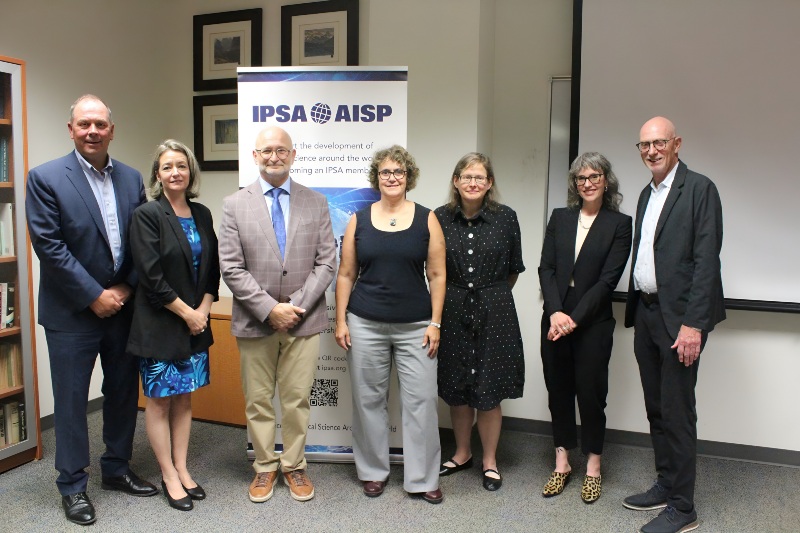
Photo (left to right): Paul Chesser (Vice-President, University Advancement, Concordia), Kim Fontaine-Skronski (Executive Director, IPSA), David Lametti (Ambassador and Permanent Representative of Canada to the United Nations in New York); Christine DeWolf (Vice-Dean, Faculty of Arts and Science, Concordia); Elizabeth Bloodgood (Professor of Political Science, Concordia); Meghan Joy (Associate Chair, Department of Political Science, Concordia), Graham Carr (President and Vice-Chancellor, Concordia).
Summer Institute Program
 The 2026 IPSA-Concordia Summer Institute in Applied Diplomacy, organized by Elizabeth Bloodgood (Professor of Political Science, Concordia) and Kim Fontaine-Skronski (Executive Director, IPSA), offered a mixture of theoretical and applied sessions on all aspects of diplomacy, along with a hands-on Diplomacy Lab where participants formed teams to work on case studies and present policy recommendations on various topics, including this year on:
- The Arctic Council in Difficult Times, presented by Sarah Cox, Director, Arctic Policy, The Gordon Foundation and former Director of Circumpolar Affairs at Northern Affairs Canada and Canadian Head of Delegation for the Arctic Council Sustainable Development Working Group;
- Fighting Online Extremism and Real-World Violence Against Immigration, presented by Elizabeth Bloodgood, Professor of Political Science, Concordia University;
- Funding UNDRIP Implementation and Continued Advocacy by First Nations at the UN, presented by Kenneth Deer, Founder of the First Nations Education Council in Québec and former member of the Board of Trustees of the UN Voluntary Fund for Indigenous Peoples; and
- Strengthening Local and Regional Governments’ Participation in Intergovernmental Processes for an Inclusive, Networked Multilateralism, presented by Fee Stehle, United Nations Human Settlements Programme (UN-Habitat).
Photo (right): Graham Carr, President and Vice-Chancellor of Concordia University, delivers a welcome speech at the IPSA-Concordia Summer Institute.
 On 25 August, Kim Fontaine-Skronski (IPSA Executive Director), and Don Stephenson (former Canadian Ambassador to the World Trade Organization, WTO), presented a session on Trade Negotiations, Past and Present. Dr. Fontaine-Skronski lectured on the WTO and its mandate from a historical perspective, while Mr. Stephenson shared his experience as a negotiator with the WTO.
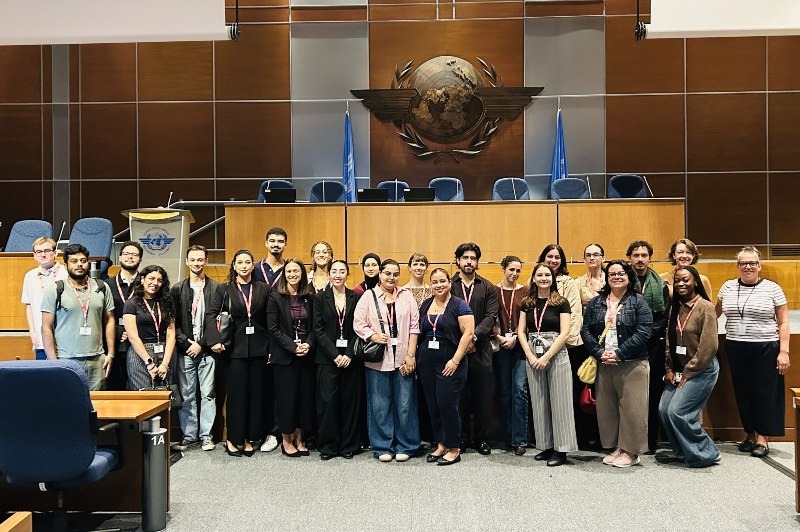
On 26 August, the participants presented their case study as part of the Diplomacy Lab and the 2026 edition concluded on 27 August with a visit to the International Civil Aviation Organization (ICAO), the only UN specialized agency in Canada, based in Montréal. The group was welcomed by Frank Neubauer, Senior Policy Advisor at Transport Canada and Alternate Representative of Canada to ICAO.
Photo: Group photo during the visit to the International Civil Aviation Organization (ICAO).
Guest Lecturers 2026
*in order of appearance
- Elizabeth Bloodgood, Professor, Department of Political Science, Concordia University
- Kim Fontaine-Skronski, Executive Director, IPSA
- Daniel Laqua, Head of Research and Knowledge Exchange (History), Associate Professor of European History, Northumbria University, Newcastle upon Tyne
- Helga Pritz, Consul General of Hungary in Montréal, and former Hungarian Ambassador to Algeria
- H.E. David Lametti, Ambassador and Permanent Representative of Canada to the United Nations in New York
- Natalia Grincheva, Arts Management, LaSalle College of the Arts, University of the Arts Singapore
- Sarah Cox, Director, Arctic Policy, The Gordon Foundation and former Director of Circumpolar Affairs at Northern Affairs Canada and Canadian Head of Delegation for the Arctic Councils Sustainable Development Working Group
- Daniel Lacroix, Director, Quebec Diplomacy Institute, Ministry of International Relations and Francophonie (MRIF)
- Yolanda Spies, Director of the Diplomatic Studies Programme, University of Oxford
- Kenneth Deer, Founder of the First Nations Education Council in Québec and former member of the Board of Trustees of the UN Voluntary Fund for Indigenous Peoples
- Adam Krzymowski, Professor of Political Science, Zayed University, and former Ambassador of Poland to the United Arab Emirates
- Ross Bayus, Retired Executive, Ultramar/Valero
- Marcello Scarone, Professor, Collégial International Sainte-Anne, and former Chief, UNESCO, Paris
- Joey Hanna, Former Head of Office, UNHCR, Montréal
- Nicolas Reuge, Senior Executive Officer, UNESCO Institute of Statistics, Montréal
- Fee Stehle, Programme Management Officer, UN-Habitat Canada Office, Montréal
- Robert Peck, Former Canadian Ambassador to Greece
- Tina Shih, Trade Commissioner, Global Affairs Canada
- Sean Clark, Consul & Senior Trade Commissioner, Consulate General of Canada in Denver
- Adriana Radulovici, Former Executive Secretary of GEO BON and the International Barcode of Life (iBOL)
- Tomas Hatala, PhD Candidate, Carleton University
- Véronique Lamontagne, Former Executive Director of Lawyers without Borders, former Director of the Office of International Relations of the City of Montréal and Senior Advisor and co-founder of the Mayors Migration Council
- Chief Ghislain Picard, Former Chief of the Assembly of First Nations Quebec-Labrador
- Geoffrey Kelley, Former Québec Minister for Indigenous Affairs, 2014-2018
- Don Stephenson, Former Canadian Ambassador to the WTO
Selected Student Testimonials on Ambassador David Lametti’s Keynote
 The Honourable David Lametti offered a distinctive perspective on Canada's global role in the wake of Mark Carney's Davos address. He demonstrated that Canada can build its leadership on the world stage through the UN and a renewed commitment to middle-power multilateralism.
**
David Lametti’s presentation reflected on Canada’s role as a respected middle power and the growing need for Canadian leadership as the international order faces new pressures, from conflicts in Ukraine and Gaza to shifting U.S. engagement and the rapid development of AI. While acknowledging the UN Security Council’s shortcomings and calling for institutional reform, he emphasized that many parts of the UN system continue to work effectively and argued that Canada has the values, relationships, and diplomatic influence needed to help strengthen multilateral cooperation.
**
Despite the many criticisms of the inefficiencies of the UN, especially the gridlock caused by its Security Council's veto power, we must not discard the UN as a whole. Notably, the success of the UN in humanitarian aid and climate change is invaluable to the global community and outweighs the inefficiencies of the organization. As the United States has taken a step back from being the guarantor of international order, middle power countries like Canada have the incredible opportunity, if not duty, to step in as alternative global leaders, as reflected in PM Carney's speech at Davos. In other words, there is much to be hopeful for regarding the future of the UN and Canada's role in it.
**
It was an honour to have the chance to not only listen to Ambassador Lametti’s insights, but to have the chance to actually engage with him as well after his keynote speech. Mr. Lametti gave us all great insight on the potential future of Canada, shedding positive light in these tense political times.
**
Ambassador David Lametti gave a very insightful keynote address, especially in the way he framed the challenges Canada now faces in a changing international system. Drawing on his position within the UN, his reflections on the need for reform were particularly convincing, especially regarding the structure of the Security Council and the role of its permanent members… Ambassador Lametti acknowledged that the UN is far from perfect, but also reminded us that it remains one of the best tools available for international cooperation. The challenge, then, is not simply to criticize it, but to be part of the generation that helps improve it.