20 Years of IPSA’s Secretariat in Canada Celebrated at the 2026 CPSA Conference in Ottawa
Publication date: Thu, 25 Jun 2026
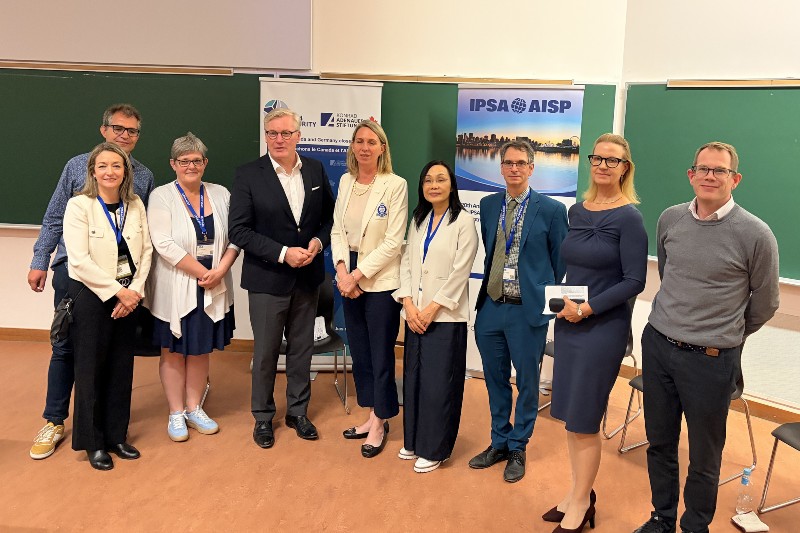
Photo (left to right): Daniel Stockemer (IPSR Co-Editor), Kim Fontaine-Skronski (Executive Director, IPSA), Lisa Young (President, Canadian Political Science Association), Bernd Althusmann (Director of the Konrad Adenauer Foundation (KAS) Canada), H.E. Tjorven Bellmann (Ambassador of Germany to Canada), Yuko Kasuya (President, IPSA), André Lecours (IPSA Executive Committee member and Professor, School of Political Studies, University of Ottawa), Marianne Kneuer (IPSA Past President, Professor and Chair, Comparative Politics, TU Dresden) and Frédéric Vairel (Director of the School of Political Studies at the University of Ottawa).
IPSA maintained a strong presence at the 2026 Canadian Political Science Association (CPSA) Conference in Ottawa, where it called attention to the 20th anniversary of its Permanent Secretariat in Montréal, Canada.
 Joint IPSA-KAS Roundtable on Canada and its Transatlantic Relations
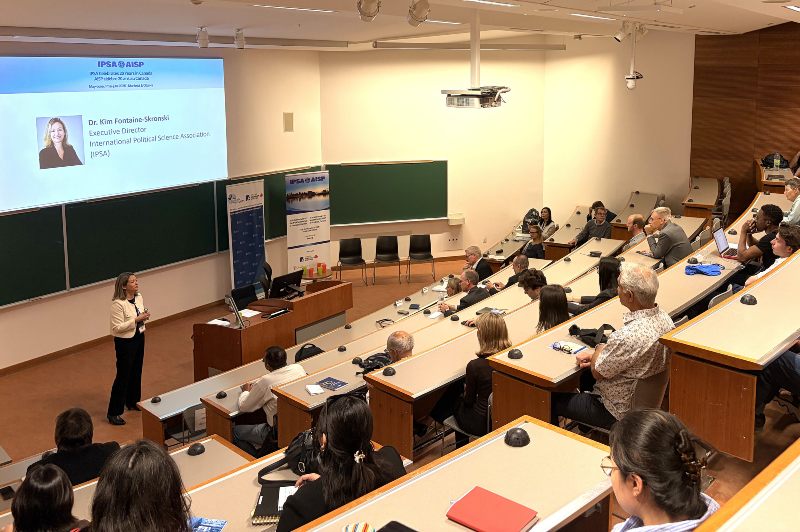
IPSA’s Ottawa events got underway with the joint IPSA-KAS roundtable on the theme of Canada and its Transatlantic Relations, presented at the University of Ottawa on 1 June 2026. Kim Fontaine-Skronski (Executive Director, IPSA) kicked off the event by welcoming guests and introducing the distinguished speakers. Frédéric Vairel (Director, School of Political Studies, University of Ottawa) then welcomed guests and congratulated IPSA on the 20th anniversary of its Permanent Secretariat in Canada.
Photo: Kim Fontaine-Skronski
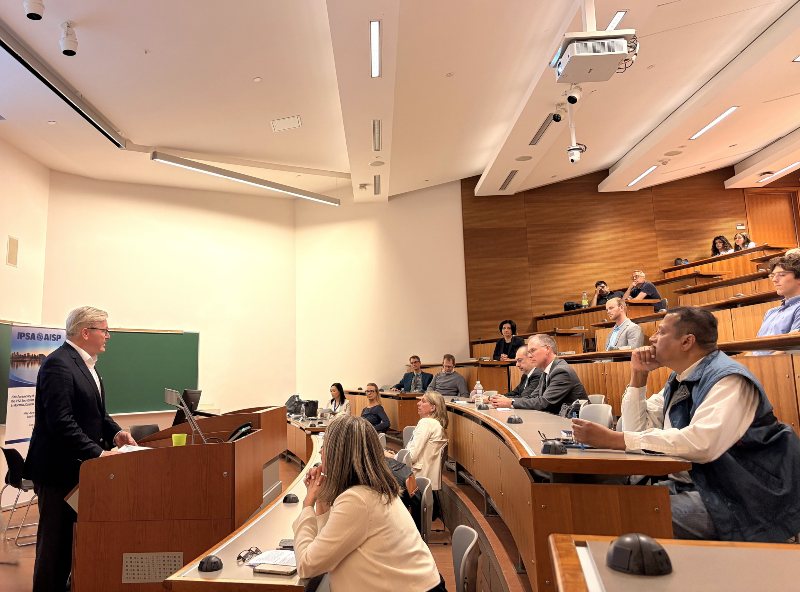 Bernd Althusmann (Director, Konrad Adenauer Foundation (KAS) Canada) reflected on the longstanding partnership between KAS and IPSA, emphasizing the importance of continued collaboration. Lisa Young (President, Canadian Political Science Association, CPSA) concluded the opening remarks by pointing up the strong ties and cooperation between CPSA and IPSA.
Photo: Bernd Althusmann
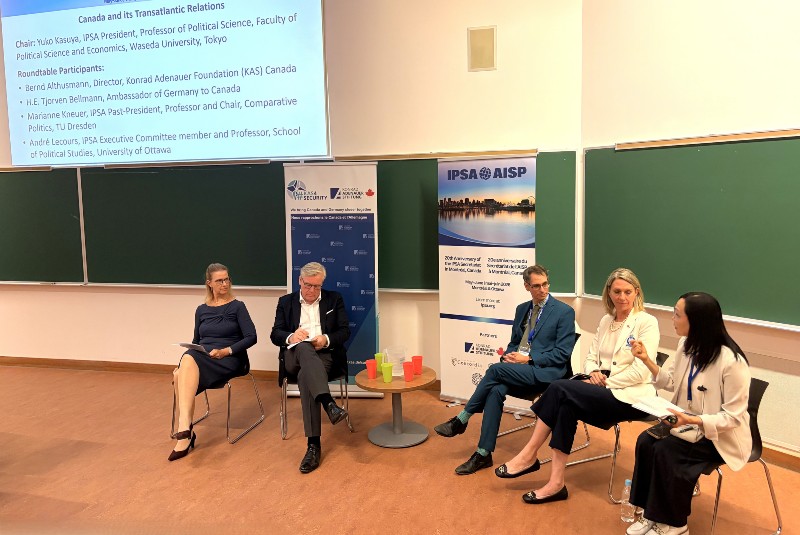 The roundtable, chaired by IPSA President Yuko Kasuya, set the stage for a meaningful exchange between academic and policy perspectives on Canada’s engagement with Europe and the wider transatlantic community. The first speaker, Marianne Kneuer (IPSA Past President, Professor and Chair, Comparative Politics, TU Dresden) examined the implications of a weakening hegemon and the rise of middle powers. André Lecours (IPSA Executive Committee member and Professor, School of Political Studies, University of Ottawa) drew attention to Canada’s historical ties with Europe, particularly the United Kingdom and France, emphasizing that domestic support is essential for sustaining Canada’s European engagement. H.E. Tjorven Bellmann (German Ambassador to Canada) discussed evolving interpretations of Canada’s international positioning, with an emphasis on opportunities for stronger Canada–Germany cooperation across multiple sectors. Finally, Bernd Althusmann (Director, Konrad Adenauer Foundation (KAS) Canada) reflected on the shifting international order and the renewed focus on strengthening transatlantic relations. The roundtable was followed by a cocktail reception, where speakers and participants had a chance to network and pick up the discussions in a more informal setting.
Photo (left to right): Marianne Kneuer, Bernd Althusmann, André Lecours, H.E. Tjorven Bellmann and Yuko Kasuya
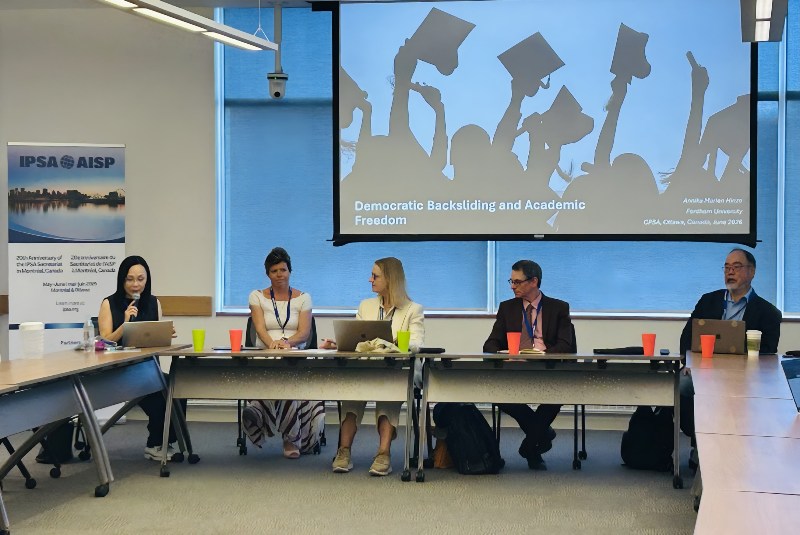 IPSA Roundtable on the Impact of Democratic Backsliding on Academic Freedom
The second IPSA roundtable on the Impact of Democratic Backsliding on Academic Freedom was held as part of the 2026 CPSA Conference program on 2 June. Chaired by IPSA President Yuko Kasuya, it saw participants examine how democratic backsliding – characterized by the gradual concentration of executive power and erosion of accountability – leads to restrictions on academic freedom, including funding cuts, governance centralization and pressure on scholars.
Photo (left to right): Yuko Kasuya, Annika Hinze, Marianne Kneuer, André Lecours and John Ishiyama
André Lecours (IPSA Executive Committee member, University of Ottawa, and Past President of CPSA) examined the Canadian and Québec contexts, noting that while democratic backsliding is not evident in Canada, academic freedoms can and do face pressures shaped by political trust. Annika Hinze (IPSR Co-Editor, Associate Professor of Political Science and Director of the Urban Studies Program, Fordham University) drew on historical and comparative evidence from the United States to spotlight the legacy of McCarthyism and show how federal funding structures can generate pressures on teaching, research, and admissions. Marianne Kneuer (IPSA Past President, Professor of Comparative Politics, TU Dresden) emphasized IPSA’s long-standing engagement with academic freedom, arguing that contemporary democratic backsliding has reshaped perceptions of these issues within the discipline. John Ishiyama (IPSA Executive Committee member, Professor and Chair of the Department of Political Science, University of North Texas, and Past President of APSA) focused more narrowly on the subnational dimension, political polarization and academic freedom, particularly in OECD countries.
 IPSA Booth
Delegates at the CPSA Conference visited the IPSA booth to learn more about the 2027 World Congress of Political Science as well as other IPSA activities and publications. IPSA President Yuko Kasuya and Executive Director Kim Fontaine-Skronski also visited the IPSA booth and met the CPSA delegates.
Photo (left to right): Kim Fontaine-Skronski, Yuko Kasuya and Eduardo da Nóbrega Monteiro.
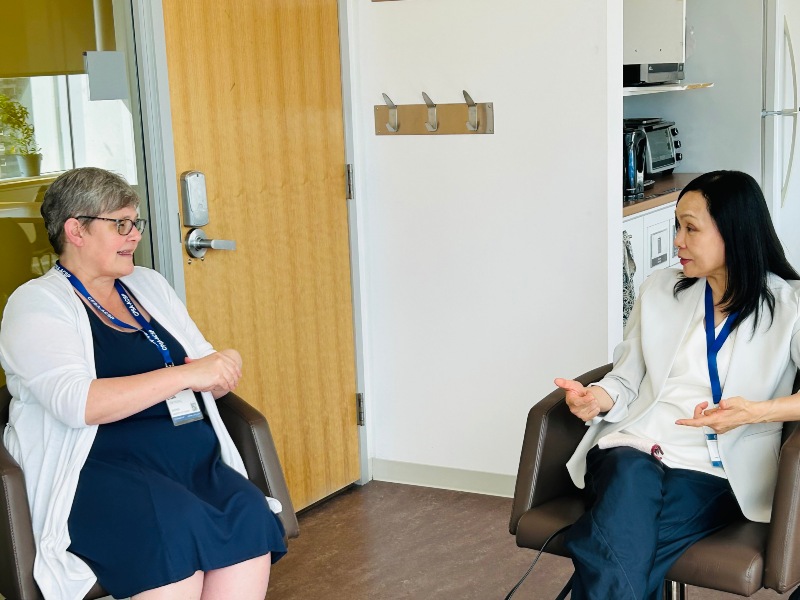 IPSA-CPSA Leadership Meeting
The IPSA-CPSA Leadership Meeting was held with the participation of Yuko Kasuya (President, IPSA), Lisa Young (President, CPSA), Luc Turgeon (President-Elect, CPSA), and Kim Fontaine-Skronski (Executive Director, IPSA). Participants discussed continued collaboration between IPSA and CPSA and explored opportunities for future joint initiatives.
Photo (left to right): Lisa Young and Yuko Kasuya