2000
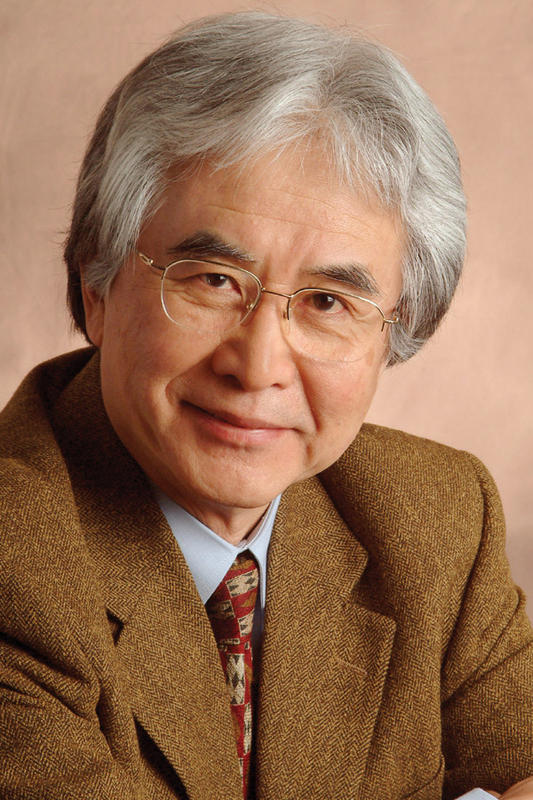
Dalchoong Kim
Yonsei University, South Korea
(2000–2003)
Dalchoong Kim is a South Korean political scientist and Professor Emeritus of Political Science and International Studies at Yonsei University. He also serves as President Emeritus of the Seoul Forum for International Affairs. His academic work focuses on comparative government and foreign policy, particularly in the areas of sovereignty, security, and economic affairs. In addition, he played a pioneering role from the 1980s in establishing International Ocean Politics as a new field of study.
Prof. Kim earned a B.A. in political science and diplomacy from Yonsei University in 1961. After completing one year of military service in South Korea, he studied at the Graduate School of Diplomacy at National Chengchi University in Taipei, Taiwan, from 1962 to 1965 on a Taiwanese government scholarship, earning a Master of Laws degree in 1965. He went on to receive a Master’s degree in International Affairs from the Fletcher School of Law and Diplomacy at Tufts University in 1966, followed by a Master of Arts in Law and Diplomacy in 1967. He completed his Ph.D. at Fletcher in 1972, with a Ph.D. dissertation titled Korea’s Quest for Reform and Diplomacy in the 1880s: With Special Reference to Chinese Intervention and Controls.
After returning to South Korea in 1972, Prof. Kim worked as a Research Commissioner at the Foreign Affairs Institute and as a Professor at the Korea National Diplomatic Academy until 1977. That year, he joined Yonsei University as a Professor in the Department of Political Science and International Studies, where he served until his retirement in 2003. At Yonsei, he held several key leadership roles, including Director of the Institute of East and West Studies and Dean of the Graduate School of International Studies.
Prof. Kim also held numerous roles in national and international organizations. He served as Secretary-General, Vice-President, and President of the Korean Association of International Area Studies (1982–1988) and held key positions in the Korea Association of International Studies, including Secretary-General (1977), President (1993), and Chair of the Association Building Committee (1993–2002). He was a founding member and long-time Chair of the Sealines of Communications (SLOCs) Study Group–Korea, a pioneering initiative in international ocean politics. He was also a founding Council member of the Korea Institute of Maritime Strategy (1996–2020), and a Council Member and Vice-President (1986–1991) of the Royal Asiatic Society Korea Branch. Dr. Kim also contributed significantly to policy development as a member of the Foreign Policy Advisory Council at the Ministry of Foreign Affairs and Trade (1981–2012), serving as its Chairman (1995–1998).
Prof. Kim’s latest publications in English include Korean Security Dynamics in Transition (co-edited with Kyung-Ae Park, 2001); Maritime Security and Cooperation in the Asia-Pacific toward the 21st Century (co-edited with Choon-ho Park, Seo-Hang Lee, and Jin-Hyun Paik, 2000); Comprehensive Security: Conceptions and Realities in Asia (co-edited with Choon-ho Park and Seo-Hang Lee, 2000); History, Cognition and Peace in East Asia (Dalchoong Kim et al., 1997, pp. 279); Maritime Policy, Maritime Security and Ocean Diplomacy in the Asia-Pacific (co-edited with Choon-ho Park, Seo-Hang Lee, and Jin-Hyun Paik, 1995, pp. 129); New Areas and Issues of International Political Studies (in Korean, co-edited by Dalchoong Kim, et.al., 1995, pp. 562); Consequences of German Unification and Its Implications for a Divided Korea (co-edited with Werner Gumpel, Gottfried-Karl Kindermann, and Ku-Hyun Jung, Yonsei University, 1992, pp. 236); Global Ocean Politics: Major Issues and Areas (co-edited with Choon-ho Park and Seo-Hang Lee, 1989, pp. 256); Asia Communism: Continuity and Transition (co-edited with Robert A. Scalapino, 1988, pp. 365); Regional Cooperation in the Pacific Era (co-edited with Noordin Sopiee, 1988, pp. 187); and Theories and Comprehension of Foreign Policy (in Korean, edited by Dalchoong Kim, 1998, pp. 480).
Within IPSA, Prof. Kim first participated in the IPSA World Congress in 1982 in Rio de Janeiro, where he organized a panel on divided nations and system integration, which later became the IPSA Research Committee on Security, Integration and Unification (RC42). He also held several key leadership positions, serving as Vice-President (1994–1997), then as First Vice-President (1997–2000), before being elected President for the 2000–2003 term.
Prof. Kim played a key role in expanding IPSA’s global reach and transforming IPSA into a truly global political science association. As the Chair of the Local Organizing Committee (LOC), he was also instrumental in bringing the IPSA World Congress to Asia for the first time, leading local preparations for the 1997 World Congress in Seoul. During his presidency, IPSA hosted its first World Congress in Africa (Durban, South Africa, in 2003), after 18 congresses held in Europe, the Americas, and Asia. He also contributed to the organization of IPSA’s second World Congress in Asia, held in Fukuoka, Japan, in 2006.